STEAM Education System

The STEAM educational system

Five domains, one principle: children learn best when they explore with their own hands. Click on a letter to discover each domain.

S T E A M
S

Science “Why does it rain? Where does the sun sleep?”

Children keep their natural curiosity through simple and safe experiments: we mix colors, grow plants from seeds, watch ice melt and observe insects in the yard. Educators don’t give ready-made answers — they help children form hypotheses (“I think that…”) and test them themselves.

weekly experiments nature corner in every classroom guided observation
T

Technology age-appropriate tools, not screens

Technology at preschool age means tools that expand play: magnifying glasses, magnets, balances, floor robots programmed with colored arrows, a microscope for “treasures” from the yard. Screen time is zero in the younger groups and very limited, only with a purpose, in the older group.

Bee-Bot robots no screens under 3 years algorithmic thinking through play
E

Engineering we build, we knock down, we build better

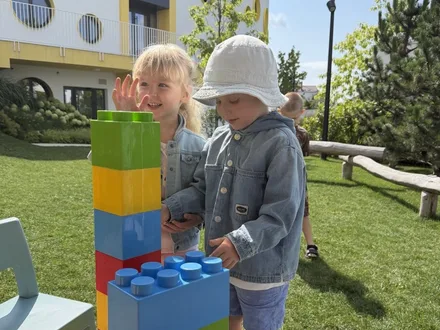
Towers of cubes, cardboard bridges, garages for toy cars, dams in the water tub — little engineers learn through trial and error that structures have rules. Educators’ favorite question: “How could we make it so it doesn’t fall anymore?” Frustration turns into perseverance, and failure becomes part of the game.

construction projects teamwork perseverance
A

Arts a hundred languages of childhood

Painting, modeling, music, dance and theater — daily, not once a week. We don’t aim for “pretty works for the display board”, but free expression: the process matters more than the result. The art studio has easels at children’s height, and musical instruments are always within reach.

daily art studio music and movement puppet theater
M

Math numbers are touched with the hands

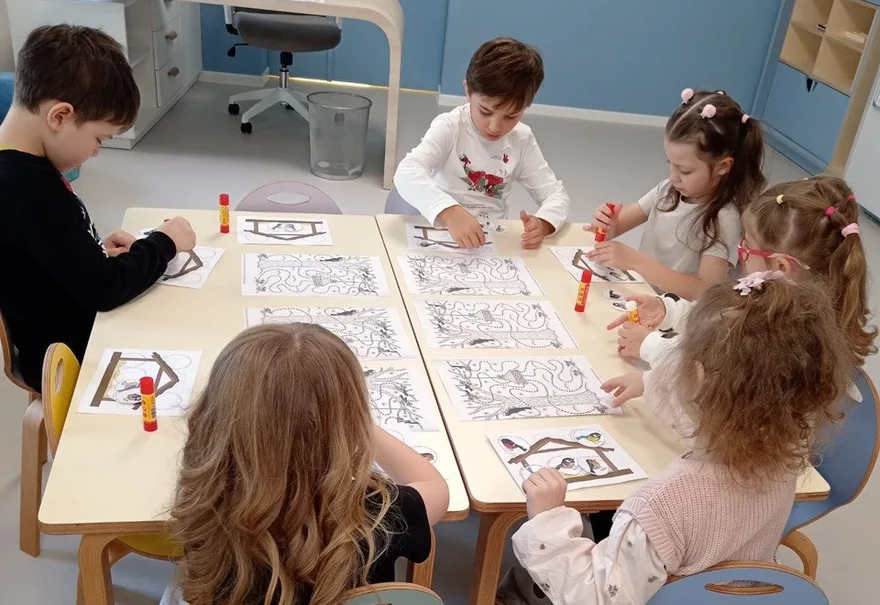
Preschool math is concrete: we sort buttons by color, compare “more / less” at snack time, measure the tower with our palms, look for geometric shapes in the kindergarten’s round windows. Montessori materials turn abstract concepts into objects children can manipulate.

Montessori materials sorting and classifying math in everyday life
A DAY AT STARTICA

What a child’s day looks like

A predictable routine gives children a sense of security, while STEAM blocks naturally blend with play, rest and meals.

  • 8:00 – 9:30 Arrival, free play and breakfast
  • 9:30 – 10:30 Daily STEAM block (experiment, construction or workshop) + snack
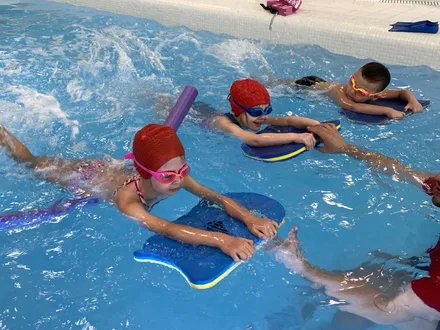
  • 10:30 – 12:30 Music, dance, sports, psychologist, swimming pool, Romanian language
  • 12:30 – 15:15 Lunch and nap time
  • 15:15 – 16:15 Speech therapist, English, speech arts + snack
  • 16:15 – 17:10 Outdoor time: playground and going home
What a child’s day looks like
Results

What Your Child Gains

Active Curiosity

Asks questions, seeks answers and isn’t afraid to try.

Autonomy

Gets dressed, eats and chooses activities independently.

Rich Language

Vocabulary developed through stories, theater and daily conversation.

Emotional Intelligence

Recognizes their emotions and learns to express them in a healthy way.

Come see STEAM in action

The best way to understand our approach is to watch the children at work. Schedule a visit on a typical school day.

Schedule a visit